
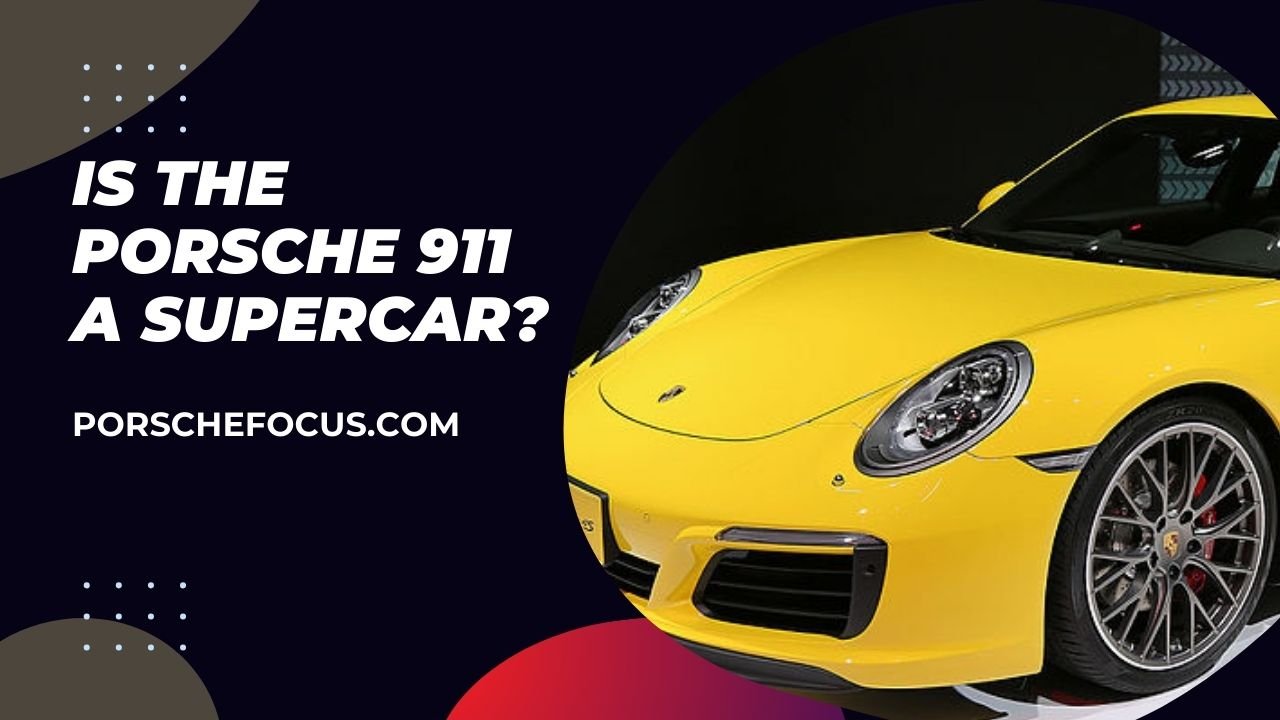
Is The Porsche 911 A Supercar? The Porsche 911 is often classified as a high-performance sports car, not a supercar, due to its exceptional handling and speed.
The Porsche 911 is one of the most recognizable cars in the world, beloved by both automotive purists and casual enthusiasts alike.
Over the decades, this car has managed to balance a legacy of performance, style, and everyday usability.
However, a question frequently surfaces in automotive circles: does the Porsche 911 qualify as a supercar? While some say yes, others argue it’s simply a high-performance sports car.
In this article, we’ll analyze what makes a supercar, how the Porsche 911 measures up, and whether certain 911 models could indeed qualify for supercar status.
What Is a Supercar?
Characteristics of a Supercar
There isn’t a universally accepted definition of a supercar, but there are several common characteristics that most supercars share.
First, supercars are renowned for their blistering speed and thrilling acceleration.
These cars typically reach top speeds well over 200 mph and accelerate from 0-60 mph in under three seconds.
They also feature cutting-edge technology, advanced aerodynamics, and exotic materials. [Is The Porsche 911 A Supercar?]
Another key feature is exclusivity—supercars are often produced in limited numbers, making them rare and desirable. Price also plays a role, as supercars often come with six- or seven-figure price tags.
Examples of Supercars
To better understand what defines a supercar, let’s look at a few examples that meet the criteria. The Ferrari 488 GTB, with its 661-horsepower V8 engine, can go from 0-60 mph in just 3 seconds.
The Lamborghini Aventador, with a roaring V12 engine, achieves this in 2.9 seconds and boasts a top speed of over 217 mph.
Finally, the McLaren 720S combines advanced aerodynamics with a 710-horsepower twin-turbo V8 engine, offering a top speed of 212 mph.
These models exemplify the qualities that make supercars stand out from other high-performance vehicles. [Is The Porsche 911 A Supercar?]
What Is the Porsche 911?
History and Evolution of the 911
Since its inception in 1964, the Porsche 911 has been celebrated for its engineering, design, and innovation. [Is The Porsche 911 A Supercar?]
The 911 started with a simple air-cooled, rear-engine design that evolved into a water-cooled system in 1998 with the 996 generation.
Porsche has continuously refined the 911 over the years, but the car’s core essence has remained the same. This consistency has built a loyal fan base and a legendary status in the automotive world.
From the classic G-series models of the 1970s and ’80s to the modern 992 generation, the 911 has always struck a balance between heritage and innovation.
Porsche 911 Model Range
The Porsche 911 lineup offers a broad range of models to cater to different types of drivers. At the entry level, the Carrera and Carrera S provide a well-rounded driving experience with impressive power, comfort, and technology.
The higher-end models, such as the 911 Turbo and Turbo S, push the limits of performance with acceleration and speed figures that rival some supercars.
The GT models, including the GT3 and GT3 RS, are engineered for the track, offering razor-sharp handling and an exhilarating driving experience. [Is The Porsche 911 A Supercar?]
Each of these models brings something unique to the table, and the diversity within the 911 lineup has helped cement its legendary status.
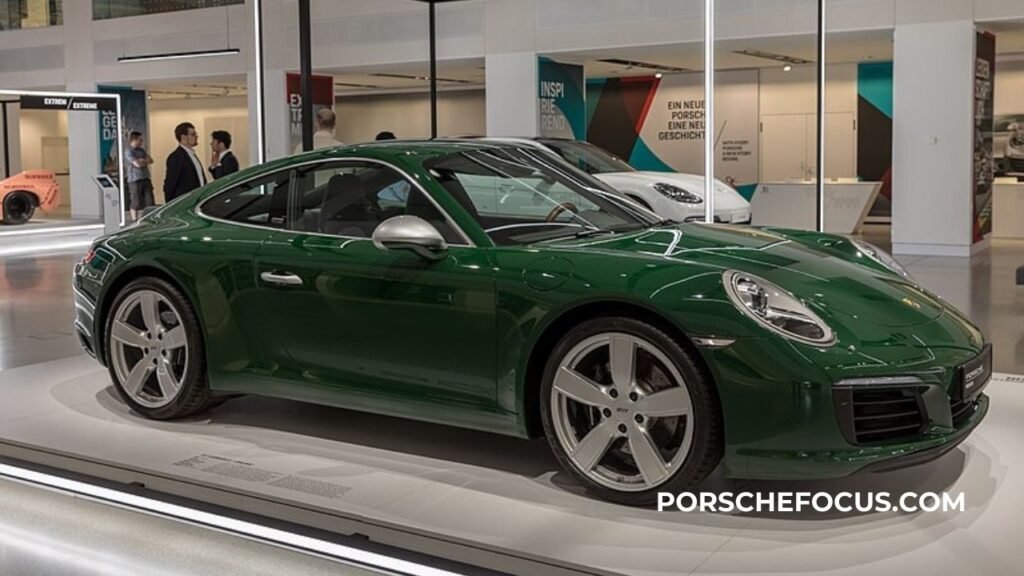
Does the Porsche 911 Meet Supercar Criteria?
Performance Capabilities
When it comes to performance, the 911 certainly holds its own against many supercars. For example, the 911 Turbo S has a 0-60 mph time of just 2.6 seconds and a top speed of over 200 mph.
With 640 horsepower from its twin-turbocharged flat-six engine, the Turbo S outperforms several established supercars.
Similarly, the GT3 model boasts impressive lap times on the Nürburgring, thanks to its naturally aspirated flat-six engine and lightweight construction.
These performance figures make the Turbo S and GT3 serious contenders in the supercar arena. [Is The Porsche 911 A Supercar?]
However, where the 911 may fall short is in sheer power output when compared to some supercars, which often push 700 to 800 horsepower or more.
While Porsche emphasizes balance and handling, which provide a more nuanced driving experience, it may lack the raw power that some enthusiasts expect from a supercar.
Exclusivity and Design
Exclusivity is another important aspect of what defines a supercar. Porsche produces the 911 in larger quantities than typical supercar brands like Ferrari or Lamborghini.
This higher production volume can make the 911 feel less exclusive, although certain models, such as the GT3 and Turbo S, are harder to come by due to limited production and high demand.
These variants carry an aura of exclusivity, as they’re often sold out before they even hit the showroom floor. [Is The Porsche 911 A Supercar?]
The design of the 911 is both iconic and understated. While supercars typically feature dramatic, aggressive designs with sharp lines and low profiles, the 911 retains a more conservative yet distinctive silhouette.
Its rounded headlights, sloping rear, and clean lines set it apart, but in a way that prioritizes functionality over flamboyance. [Is The Porsche 911 A Supercar?]
Some enthusiasts appreciate this subtlety, while others may feel it lacks the “wow factor” of more exotic supercar designs. [Is The Porsche 911 A Supercar?]
Price and Position in the Market
The cost of a car can also influence its classification as a supercar. With starting prices around $110,000 for a base Carrera and upwards of $200,000 for the Turbo S, the 911 is not cheap.
However, it remains more affordable than many supercars, with models like the Lamborghini Huracán or Ferrari Portofino starting well above the 911’s price range.
The 911’s relatively accessible pricing has made it a popular choice among enthusiasts who want supercar performance without the supercar price tag.
While this broad appeal makes the 911 successful, it also detracts from the exclusivity typically associated with supercars. [Is The Porsche 911 A Supercar?]
The 911 Turbo S: A Supercar in Disguise?
Performance Review
The Porsche 911 Turbo S has redefined what a sports car can achieve. With a 3.8-liter, twin-turbocharged flat-six engine generating 640 horsepower, the Turbo S is capable of breathtaking acceleration.
This car can go from 0 to 60 mph in just 2.6 seconds and has a top speed of 205 mph, rivaling or even exceeding the performance of traditional supercars.
It also features Porsche’s advanced all-wheel-drive system, adaptive aerodynamics, and a dual-clutch transmission, all of which contribute to an exhilarating and controlled driving experience.
Why It’s Often Called a Supercar
Despite its sports car classification, the 911 Turbo S frequently gets called a supercar due to its performance specs.
With numbers that match or exceed those of some supercars, it’s no wonder enthusiasts often debate its classification. [Is The Porsche 911 A Supercar?]
The Turbo S delivers a blend of speed, precision, and handling that few cars can match, making it a true performer on the track or the open road.
However, the Turbo S retains an element of practicality and everyday usability that many supercars lack, blurring the lines between a high-performance sports car and a supercar.
Porsche’s Take on the 911’s Classification
How Porsche Markets the 911
Porsche typically markets the 911 as a high-performance sports car, rather than a supercar. This classification allows Porsche to emphasize the 911’s versatility, practicality, and iconic status.
The 911 is designed to be driven daily, and Porsche has built a reputation for reliability and usability that many supercar manufacturers lack. [Is The Porsche 911 A Supercar?]
By positioning the 911 as the ultimate sports car, Porsche has created a distinct identity for the model, differentiating it from the more extreme offerings from brands like Ferrari, Lamborghini, and McLaren.
Porsche’s True Supercar: The 918 Spyder
For those seeking an undeniable supercar experience, Porsche offers the 918 Spyder. This limited-production hypercar combines a V8 engine with electric motors to deliver a combined 887 horsepower.
With a top speed of 211 mph and a 0-60 time of just 2.2 seconds, the 918 Spyder leaves no doubt about its supercar status. [Is The Porsche 911 A Supercar?]
The 911, in comparison, serves a different purpose. While it can match or exceed some supercars’ performance, the 911 is not positioned as Porsche’s supercar flagship.
What Car Enthusiasts and Experts Say
Arguments for the 911 as a Supercar
Many automotive experts and enthusiasts argue that certain 911 models, such as the Turbo S and GT3, meet the criteria for a supercar due to their performance figures and engineering excellence.
The Turbo S, in particular, offers acceleration, speed, and handling that place it squarely in supercar territory. [Is The Porsche 911 A Supercar?]
Additionally, the limited availability and desirability of the GT models add a level of exclusivity that helps elevate the 911’s status.
Arguments Against
On the other hand, some enthusiasts maintain that the 911, even in its most potent forms, lacks the extreme styling and exclusivity that define a true supercar.
For these critics, the 911 is a high-performance sports car that prioritizes balance and everyday usability over sheer power and prestige. [Is The Porsche 911 A Supercar?]
They argue that while the 911 is undoubtedly fast and capable, it does not have the same aura of exclusivity or exotic appeal as traditional supercars.
See Also: Is Porsche Switching To NACS?
FAQs
Is the Porsche 911 Turbo S faster than some supercars?
Yes, the 911 Turbo S can outpace certain supercars with its 0-60 mph acceleration time of around 2.6 seconds and a top speed exceeding 200 mph.
How does the Porsche 911 compare to the Ferrari 488 in performance?
While the Ferrari 488 offers a more exotic design, the 911 Turbo S matches it in speed and acceleration, making it a formidable competitor. [Is The Porsche 911 A Supercar?]
What makes the Porsche 911 GT3 a standout model?
The GT3 is known for its track-focused performance, exceptional handling, and naturally aspirated engine, offering a pure driving experience revered by enthusiasts.
Is the Porsche 911 considered more practical than most supercars?
Yes, the 911’s usability, reliability, and everyday comfort make it a more practical option than many supercars, which often sacrifice comfort for performance.
Does Porsche plan to release another supercar like the 918 Spyder?
While Porsche has not announced a direct successor to the 918 Spyder, rumors suggest that the brand may introduce another hypercar in the future.
Conclusion: Is The Porsche 911 A Supercar?
The Porsche 911 occupies a unique place in the automotive world. [Is The Porsche 911 A Supercar?]
While it might not fit the classic definition of a supercar, especially with its emphasis on practicality and daily usability, certain models—like the Turbo S and GT3—certainly deliver supercar-level performance.
Whether or not it qualifies as a supercar depends on how you define the term.
But one thing is clear: the Porsche 911 continues to captivate and inspire drivers around the world, standing as a testament to Porsche’s legacy of engineering excellence.
